by Audrey Fankhanel
*Format update: I will no longer be listing my sources at the bottom of the page, but I am happy to provide my source list & further reading for those who are interested.*
Who has the right to eat?
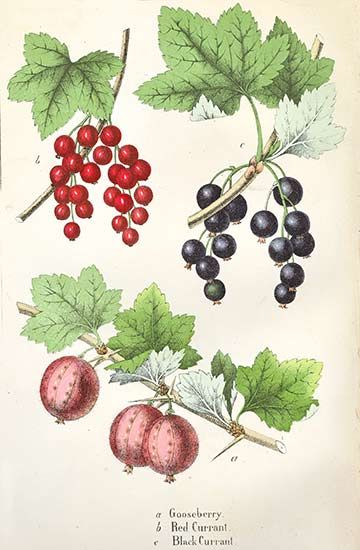
Food is everywhere, especially here in my home state of California. According to the California Department of Food and Agriculture, the state produces over one-third of the US’s vegetables and almost three-quarters of the nation’s fruits and nuts. Even beyond the abundance of restaurants, farms, and groceries available throughout the state, the California landscape is full of edible plants, ripe for the picking. Juicy prickly pear, nutrient-dense chia, sweet golden currants, and various types of sage are just a few of the edible plants you can find in California (and they all sound like they would come together into a lovely jam). Yet, in spite of all the abundance, hunger persists.
California is hungry. In 2023, 23% of California residents were reported to be food insecure. This is in contrast to the US national food insecurity statistic of 12.8%. Black communities, immigrants, and indigenous communities are much more likely to face hunger than other groups. Why are the communities who have historically shaped the California diet the hungriest of us all? Of course there are many public health studies, laws, historic events, and cultural phenomena that can help answer this complex question, but one cause I am especially interested in is anti-foraging laws.
Throughout the darkest moments in our world’s history, found foods have been a source of relief from famine, oppression, and malnutrition. Foraged foods are often readily available, and very easy on the wallet, and many ancient culinary traditions are based in what foods are found near the eater’s home. The landscape is what ultimately differentiates Italian cuisine from Thai.
I wouldn’t count myself as a forager, although according to the basic definition of foraging, I am one. On my lunchtime walks around the university campus where I work, I bring a little basket with me to collect the edible plants I see along the way. Is it really foraging if all the plants were placed there by a landscaping team? I am more like a thieving rabbit, jumping the fence into someone’s home garden where I am quite unwelcome. While it may feel illegal, that is the essence of foraging– eating what is available to you, even if it is a crime– and foraging is becoming more of a crime every day.
Our university campus has an abundance of edible plants on our grounds, most of which go to waste. The ground is littered in rotting, sticky California mission olives. Many citrus trees drop their molding fruits on the dirt, and the magnolia trees are pruned just when the best-tasting flowers come out. The waste is endless. I once saw a dumpster FULL of grapefruits. I work in a student services area, where many food-insecure students cross my path, and I wonder if all this wasted food could be better put to use by giving it to them. Yet, the food continues to be thrown in the trash. Our university is a microcosm of most urban communities throughout the US. On my walks, I think back to an article by Baylen Linnekin on anti-foraging laws, and the implications they have on a city’s access to food.
In “Food Law Gone Wild: The Law of Foraging,” Linnekin details how foraging impacts our cultures, and how US laws have limited access to food from pre-colonialism to the present day. It is a great read, and there are some key points that are crucial to internalize. Firstly, Americans forage for health, enjoyment, financial, and cultural reasons. Secondly, many anti-foraging laws are often implemented in the name of environmental protections (e.g. leave no trace), but instead the laws often deepen disparities among disenfranchised communities. Thirdly, anti-foraging laws are historically a westerner’s response to indigenous, Black, and rural communities’ traditions. Lastly, most anti-foraging laws are based in a western mindset of property ownership. Since foraging laws change rapidly, most Americans don’t know what or where they can legally pick and eat. Am I even allowed to pick the oranges and magnolia blossoms at my work? I’m honestly not sure.
Our food originally comes from the land, and it has always been that way. The Sun’s energy hits our planet, plants absorb it, and then turn it into energy that we can digest. No matter what we eat, this is the first step in our foodways. Each bite that we take originated in “the wild.” In actuality, there is no such thing as “the wild.” All of our food comes from the wild, we live in the wild, and even our corporate buildings and cities exist in the wild. There is no separation. The concept of land ownership has shifted the western mindset to separate the wild and the tame. If I own this plot of land, why should you be able to harvest the wild plants from it?
The hunter-gatherer model is considered the first foodway for humanity, and it is the basis of many of our ancient traditions. The hunter-gatherer model has also been used to perpetuate sexist and racist tropes in academic spaces for some time now. Think macho-hunter-man supporting weak-gatherer-wife. (You know, the wax model you’ve seen in museums and the illustrations from your high school textbooks.) Up until very recently, the idea that our ancestors around the globe ate primarily meat, and that men were the primary food suppliers for the family, was unquestioned truth. However, this year (2024) archaeologists in Peru have found evidence in bone DNA that alludes to our ancestors being primarily vegetarian. This implies that the women who were gathering the plants were the ones truly sustaining the community. Gathering has always been crucial to our survival, and the gatherers are just as integral. Women, people of color, and indigenous populations feed the world.
America has returned to foraging in the wake of the COVID-19 pandemic; the trend of growing income disparities means people are on the hunt for free, healthy food. It is no surprise that as foraging resurged, so did laws prohibiting it. Returning to foraging practices is inherently anti-capitalistic. When you forage, you take what you need and leave behind what you don’t so that other gatherers and nature itself can keep what they need. It is a self-sustaining model that needs no influence from industry.
We have now entered an era where our most basic foodway– foraging– has been gentrified. Industrial truffle forests have taken over the traditional folk methods. Michelin-star restaurants are incorporating more and more foraged ingredients into their menus. While casual foragers are faced with heavy overharvesting fines, these restaurants are applauded for incorporating local ingredients.
Having the time to forage is itself a privilege as well. The working class population that would most benefit from the free nutrients found in foraged foods is the same population that is driving fast food sales. Having the time to be a human who is connected with the earth and with the food that comes from it has become a luxury. This is a challenge to “rise & grind” culture and fast-paced capitalism. We return to foraging again in search of healthy foods untouched by corporations. This is especially evident across social media.
There are many foraging content creators across the web, but there is one in particular that stands out. I deeply admire Alexis Nikole Nelson. She can be found on social media platforms as @blackforager. I started following her TikTok account in 2020, and I’ve enjoyed watching her fan base grow and an eco-conscious community develop. Her recipes for lilac jelly and sea-water brine pickles may seem foreign to our new-American diet, but they are more genuine than any food you could find wrapped in plastic.
We are unfortunately in an era where we must learn about our own dying traditions through influencers and books and not through ancestral knowledge. With each new law passed, we lose a piece of culinary tradition. No matter how the knowledge is obtained, it will be crucial for our survival to educate ourselves on how we can best serve our bodies, our planet, and our taste buds with the foods we walk past everyday. It is fairly simple to eat if we have the knowledge on how to do so. I have come to this simple conclusion: food is a right, not a product.
 Olla
Olla 
Leave a comment