
By Audrey Fankhanel
Consider me a fighter pilot. Fight or flight is my body’s automatic state, and I am constantly manually turning off this horrible function every day. Through the years, anxiety has played a role in my mental and physical pain, autoimmune disorders, and inflammatory issues. Diet has been pivotal in taking control of my health. We are learning more and more each year on how interconnected our gut is to our mind, and vice versa, and the importance of an anti-inflammatory diet. In order to decrease stress levels, we must eat more turmeric, more fermented foods, and stay away from gluten and dairy, two foods which historically have primarily sustained humanity.
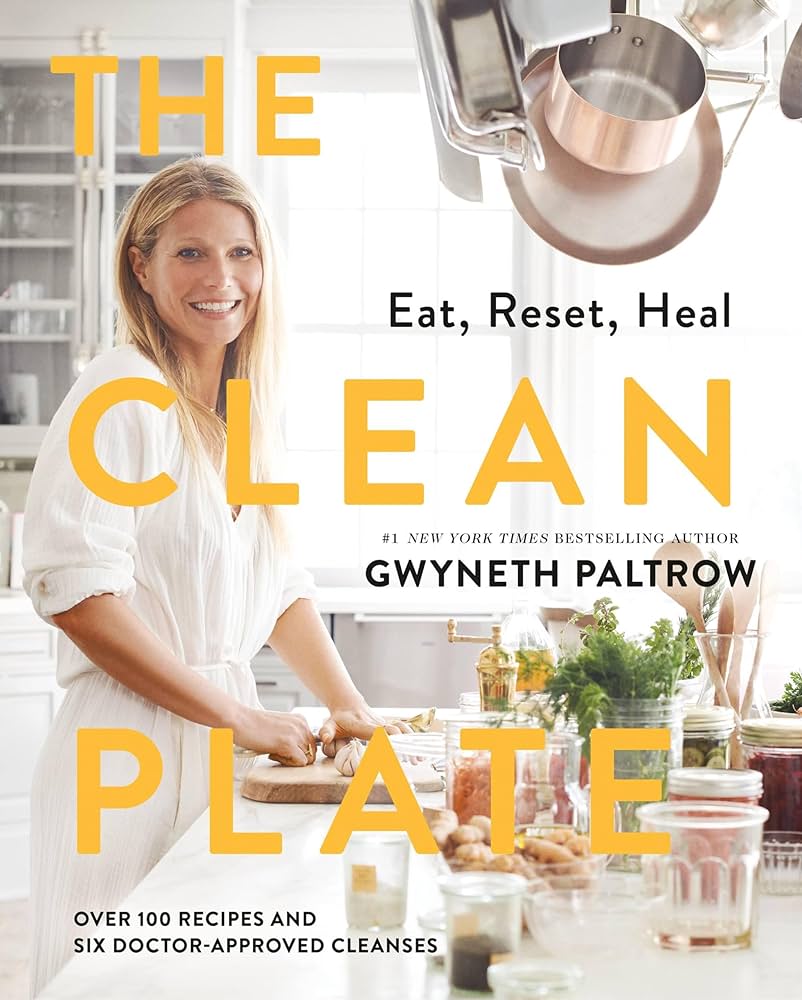
To see westerners pushing a whole-food, plant-based diet to decrease stress and inflammation is a great step forward to better health for our fast-food society, but we cannot deny the elitism in health trends. The most extreme versions of the fad diets are primarily promoted by celebrities who have private nutritionists and can be dangerous if not monitored by doctors. Gwyneth Paltrow has recently faced backlash for her “anti-inflammatory” diet of primarily bone broth.
The irony of it all is that the lower classes are the ones suffering with a higher rate of inflammatory diseases. These same communities are the ones living in food deserts without access to fresh produce and other anti-inflammatory, healthy foods. What happens to those who only have bread to eat? What if you are in survival mode and have limited access to other foods? How can you cope with the stress of surviving if the only foods you have available are what dietitians are now calling poison? This is the reality of many people trapped within a military-industrial complex, especially those in an active war zone.
As an undergrad history student, many of my classes were framed by wars. I am now two years post-grad and war is still on my mind. It weighs on me when I wake up in the morning, the same way my fight or flight response does. I hate war and all that it stands for, no matter the cause. The amount of destruction in its wake cannot be justified by any means. The toil on the human body and mind cannot be comprehended unless you experience it first-hand. While I battle my own mental health issues, I have no understanding of the type of anxiety that accompanies life in a war zone.
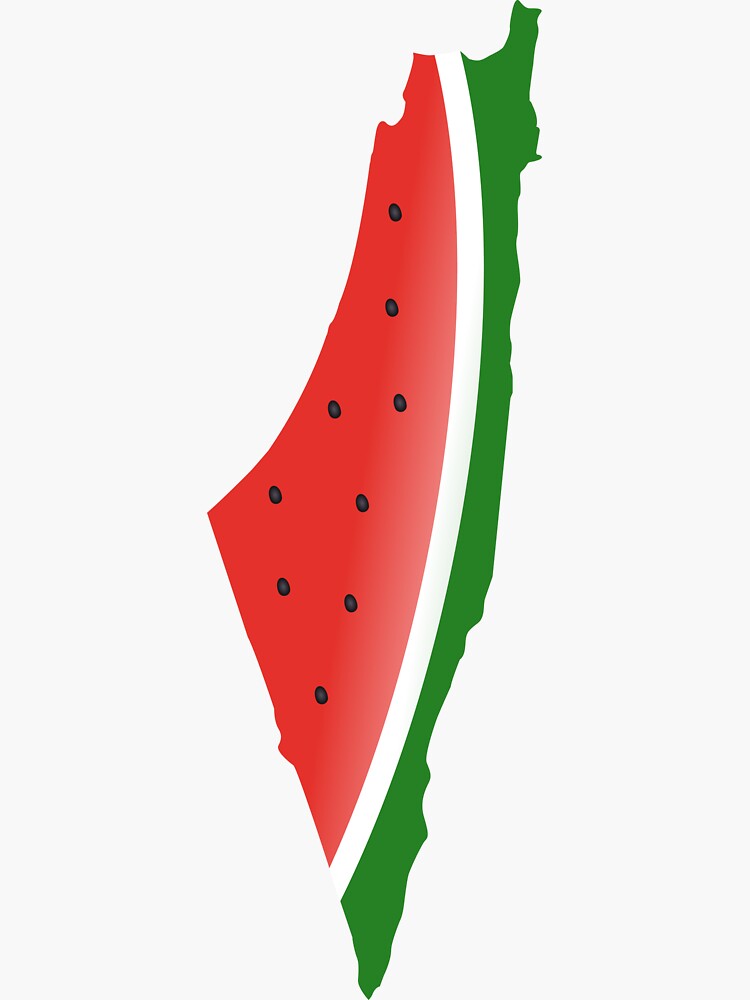
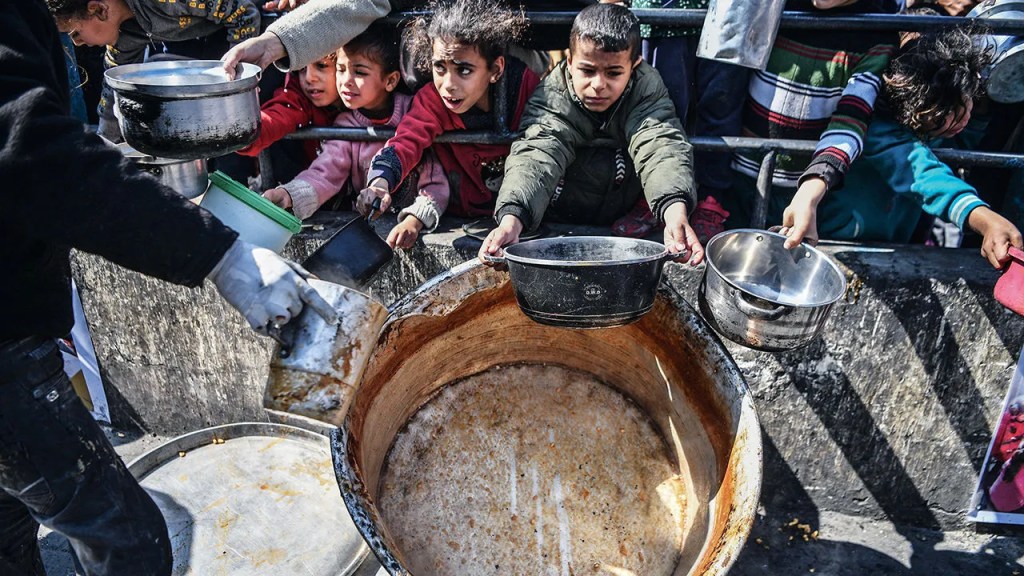
I originally had a beautiful article about foraging scheduled to post today, but war is imposing itself into my work because I am witnessing injustices that I cannot be silent about. I strive to always be honest in my work, and I cannot be honest and not write about war. I feel helpless watching the Palestinian genocide in Gaza unfold. As I’m writing this, an invasion of Rafah is in motion and I can’t help but wonder how I could help the thousands of people sheltered there meet their basic needs. In a CNN article published March 19, 2024, it was reported that “all 2.2 million people in Gaza do not have enough food to eat” and that “famine is imminent” in the region. Here we are two months later, and the situation has worsened.
War is an unnatural act. Our bodies reject it, and we retreat to survival mode to cope with the injustice we face in its midst. Both the stress of war and the many dangerous chemicals used have been shown to increase a soldier’s risk of cancer by 87%. Our bodies and minds are not meant to be in a state of survival; we are intended to thrive and prosper as a united body. This is the concept that most major world religions revolve around: unity in love.
I know, I sound like a hippie. I want to sound like a hippie, because within the smoke haze of 1969 wafted profound truths that we are rapidly forgetting. It is no coincidence that the organics movement resurged in unison with the rise of the anti-Vietnam War movement. The hippies were fighting the system that outlasted their movement– a system that both Republican and Democratic Americans are growing tired of. Our farming practices, importation and trade pipelines, and food pricing structures are intrinsically tied to the US’s military involvement abroad, and it is making us sicker. Synthetic fertilizers, pesticides, Midwest corn farming… It is all to support big oil and the military’s expansion. Our foodways are causing societal inflammation, and the world is in fight or flight mode as a response. In the words of Joni Mitchell, “Hey farmer, farmer, put away that DDT now!”

I hear you; you came to this blog to learn about culinary tradition, not war. Now I am no expert on Palestinian traditions. Additionally, in an academic sense, we do not yet have the insight to say how this war will affect Palestinian culture in the long term. However, I personally have relatives that survived war. My grandmother and her family are survivors of the Spanish Civil War and the fascist regime that followed. The effects of war are still heavily felt in Spain, and my grandma still is hesitant to talk about the war due to her trauma. The foods she taught me to cook, though, tell a lot of the story.
Most traditional Spanish foods eaten by the common people revolve around repurposing stale bread. Many stale bread recipes in Spain go back to Medieval pastures, where shepherds would munch on bread crumbs throughout the day or week. During the war, these old world recipes were revived to sustain a country that was falling apart.
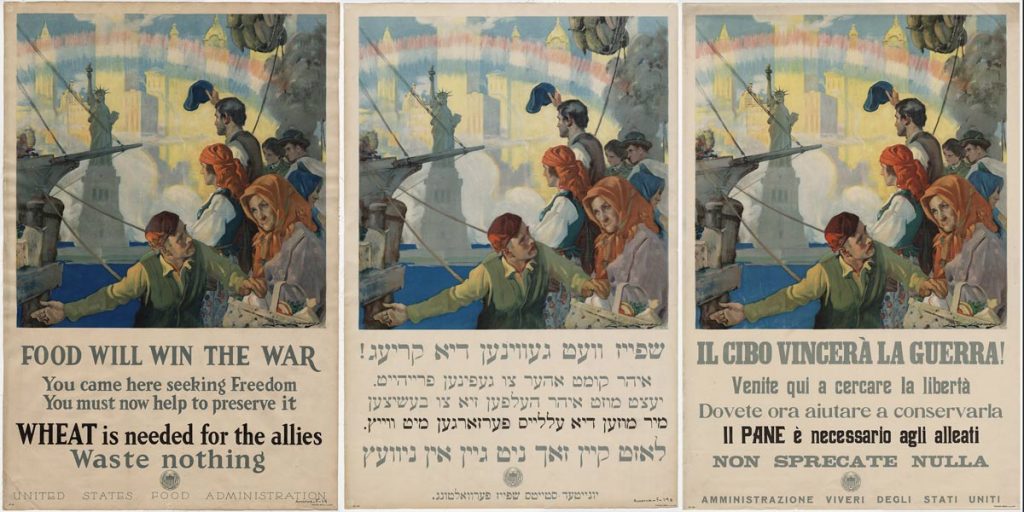
Basic and simple foods, like bread, become incredibly valuable in wartime. As Americans saw in World War I, bread can fuel armies and provide sustainable nutrition for civilians in the war zone. Access to white bread became a signifier of wealth in the aftermath of Spanish Civil War; the poor could typically only afford to eat bread made with rye or barley, “pan integral.” To this day, my grandma has to have “alossa bread” (lots of bread) with her meal, as do most Spaniards. This is a phenomenon that did not occur until after the war. Many myths were perpetuated by Franco and his government to convince the people that their hunger was because of a draught or other natural phenomena. The only draught that existed was a draught of access to international food trade systems.
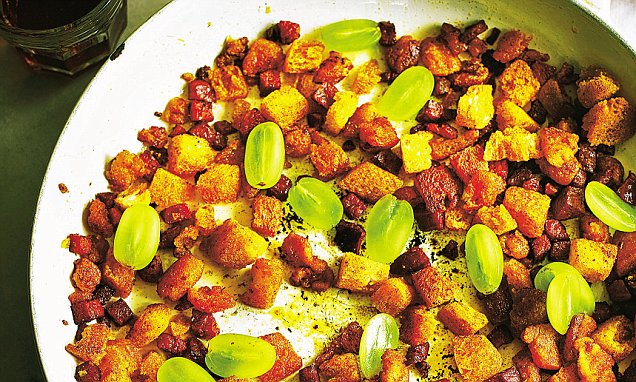
In the case of Spain, one stale bread dish became a symbol of both the widespread hunger and resiliency throughout the peninsula: Migas. The word migas translates to “crumbs.” Migas is a dish consisting of dry bread crumbs soaked in water and then fried in olive oil or bacon fat, and topped with various fruits, vegetables, and meats. The traditional way to eat them in my family’s region of Aragon is to fry the soaked bread crumbs with a considerable amount of olive oil and garlic, and top them with grapes.
In today’s Spain, the country is set to acknowledge a Palestinian state before July, along with Ireland and a handful of other small EU members. Spanish Foreign Minister José Manuel Albares said in his official statement, “We need a real Palestinian State… The Palestinian people must not be condemned to forever be refugees.” Spain has also generally been the most publicly critical of Israel in the EU since October 7. A celebrity Spanish chef, José Andrés, even lost seven workers in an airstrike that were working for his relief agency stationed in Gaza, World Central Kitchen. Spaniards have not forgotten what it feels like to be in the throws of war, and they are doing their part to end this conflict.
Americans are quick to distance ourselves from international wars. We analyze and criticize from the comfort of our track homes, and do little to see our own role in the genocide unfolding. The US gives more military aid to Israel than any other nation on the globe. This is what our tax dollars, our oil, and our corn is spent on. So what can we do about it? Let’s take a page from the hippies and the Spaniards and turn to food as a force of rebellion. Eat something you’ve never tried before, forage for your own ingredients, or boycott food coming off industrial farms. Any step is one in the right direction for our own mental health and the world’s societal health.
To me, migas means hope– hope that cultures can reclaim the pain of war and famine, and hope that they can make something delicious out of it to pass on to their future generations. Food allows us to understand each other in an intimate way. We take another’s symbol of survival and digest it into our physical body. We feel the remnants of war in our food, and taste the pain our cultures have survived. When we are in times of peace and prosperity, we eat crumbs to remember the rubble.
References
- https://www.cnn.com/2024/03/19/middleeast/famine-northern-gaza-starvation-ipc-report-intl-hnk/index.html
- https://www.rutgers.edu/news/we-are-not-hardwired-go-war
- https://www.cancer.gov/news-events/cancer-currents-blog/2021/cancer-returning-stress-hormones
- https://www.npr.org/sections/thesalt/2018/01/23/579186110/the-far-out-history-of-how-hippie-food-spread-across-america
- https://www.nytimes.com/2017/09/08/opinion/gop-hippie-food-health.html
- Michael Pollan, The Omnivore’s Dilemma: A Natural History of Four Meals (New York: Penguin, 2006), 32-64.
- Dan Saladino, Eating to Extinction: The World’s Rarest Foods and Why We Need to Save Them (New York: Farrar, Straus, and Giroux, 2022), 66-74.
- https://genius.com/Joni-mitchell-big-yellow-taxi-lyrics
- https://www.theworldwar.org/learn/about-wwi/baking-during-time-crisis
- https://www.smithsonianmag.com/history/battle-memory-spanish-civil-war-180969338/
- https://www.theworldwar.org/learn/about-wwi/baking-during-time-crisis
- https://www.economist.com/middle-east-and-africa/2024/03/27/gaza-is-on-the-brink-of-a-man-made-famine
- https://www.politico.eu/article/spain-recognize-palestine-state-statehood-by-july-2024-foreign-minister-jose-manuel-albares/
- https://www.dailymail.co.uk/home/you/article-3701333/Made-Spain-Migas.html
- https://www.barcelona-metropolitan.com/features/history/the-silenced-famine-of-the-spanish-post-war-period/
- https://www.cfr.org/article/us-aid-israel-four-charts
- https://www.medicalnewstoday.com/articles/what-are-food-deserts#:~:text=What%20is%20a%20food%20desert%3F&text=Food%20deserts%20are%20areas%20where,of%20healthful%20and%20affordable%20food.
- https://www.today.com/popculture/gwyneth-paltrow-bone-broth-backlash-explained-rcna75495
- https://www.shefinds.com/collections/gwyneth-paltrow-anti-inflammatory-paleo-diet-clever-carbs/#:~:text=%22So%2C%20I’ve%20been,the%20podcast%20at%20the%20time.
- https://www.medicalnewstoday.com/articles/320233
 Olla
Olla 
Leave a comment